


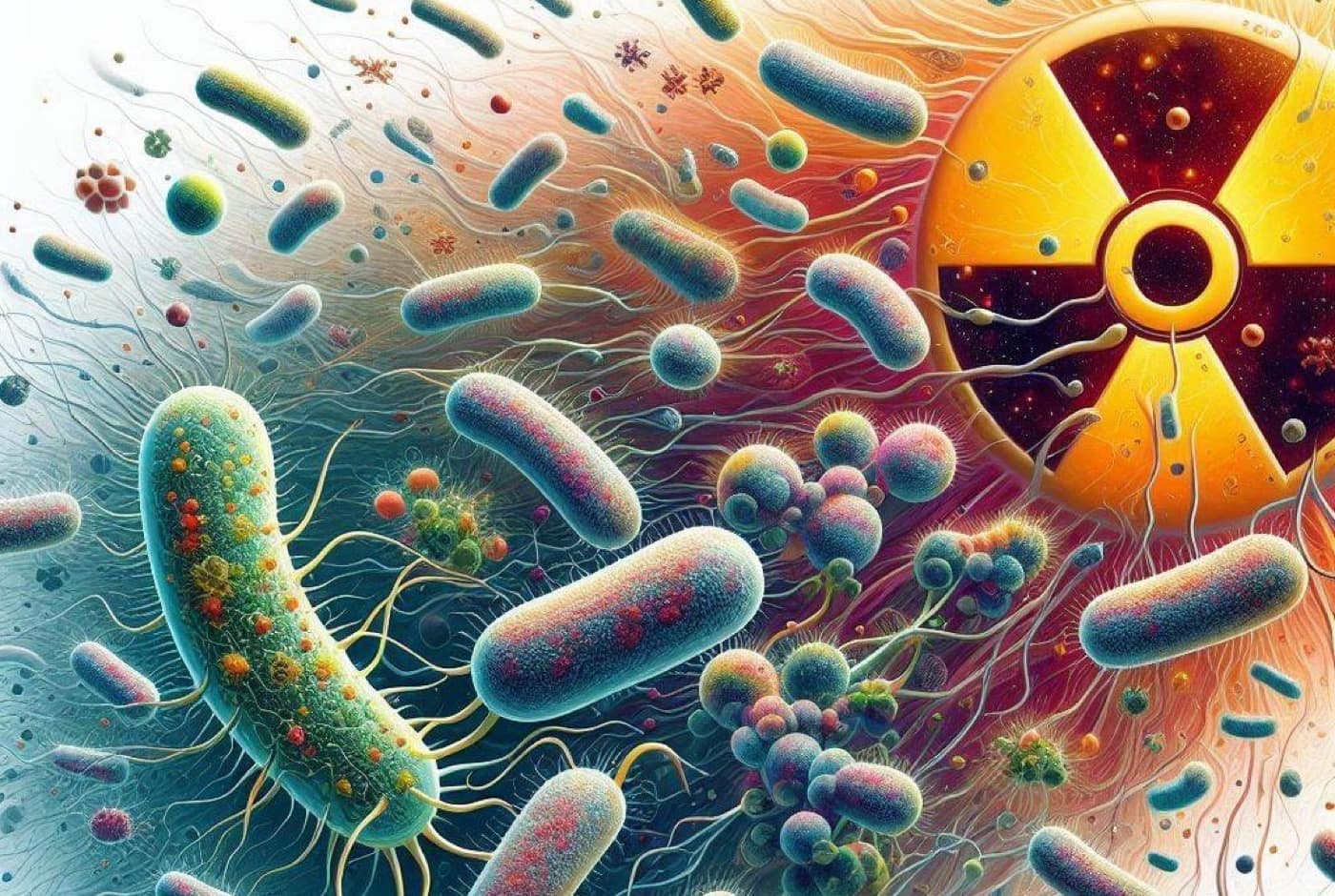

In the heart of a nuclear reactor, amidst a storm of gamma rays that would shred human DNA to confetti, an unsung hero of the natural world thrives. It’s not an alien, nor a creature from a comic book. It’s a bacterium, and it holds the secret to surviving the apocalypse. Meet Deinococcus radiodurans, an extremophile so tough it’s been nicknamed “Conan the Bacterium” by scientists. This microscopic marvel can withstand atomic blasts, bone-dry deserts, and the vacuum of space. But how does this unkillable bug do it?
A Master of Genetic Resurrection
When we think of nuclear radiation, we think of utter devastation. For most living things, a high dose of radiation is a one-way ticket to oblivion. A dose of 5 to 10 Grays (a unit of absorbed radiation) is lethal for a human. Deinococcus radiodurans, however, can take over 5,000 Grays without breaking a sweat. It can endure a staggering 15,000 Grays and still piece itself back together. That’s 3,000 times the dose that would kill you.
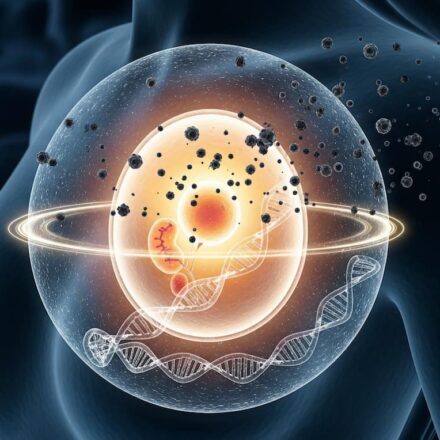
The secret to its survival isn’t a shield or some form of invisible armour. It’s an extraordinarily efficient and robust set of DNA repair machinery. Radiation wreaks havoc by shattering an organism’s genetic code. For this bacterium, that’s just a temporary inconvenience. Its internal “genetic toolkit” is a marvel of biological engineering. While most organisms have a single copy of their genome, Deinococcus has multiple copies. When its DNA is blasted into fragments, this redundancy allows it to use the intact pieces from other copies as a template. Within hours, its molecular machinery flawlessly stitches the shattered strands back together, effectively achieving a genetic resurrection from what should be certain death.
From Nuclear Waste to the Hunt for Life on Mars
The incredible abilities of this microscopic survivalist aren’t just a scientific curiosity; they hold immense potential for groundbreaking technologies. Scientists are actively exploring how to harness Conan the Bacterium for bioremediation. By genetically engineering it, we could create living machines capable of cleaning up some of the most toxic places on Earth—radioactive waste sites. Imagine these tiny powerhouses swimming through contaminated water, metabolizing and neutralizing deadly nuclear byproducts.
The implications are, quite literally, out of this world. The same resilience that allows Deinococcus to survive radiation makes it a prime candidate for astrobiological studies. The surface of Mars is bombarded with cosmic radiation, making it incredibly hostile to life as we know it. The existence of an organism like Deinococcus radiodurans suggests that life, in its most extreme forms, could potentially survive in such harsh environments. It redefines the very boundaries of where life could exist, giving us a new blueprint for what to look for in the hunt for extraterrestrial organisms.
From the atomic to the astronomic, Deinococcus radiodurans challenges our understanding of life itself. It’s a living testament to nature’s tenacity and a beacon of possibility for the future of science and technology. The unkillable bug that eats radiation for breakfast might just be the key to cleaning our planet and discovering new ones.