


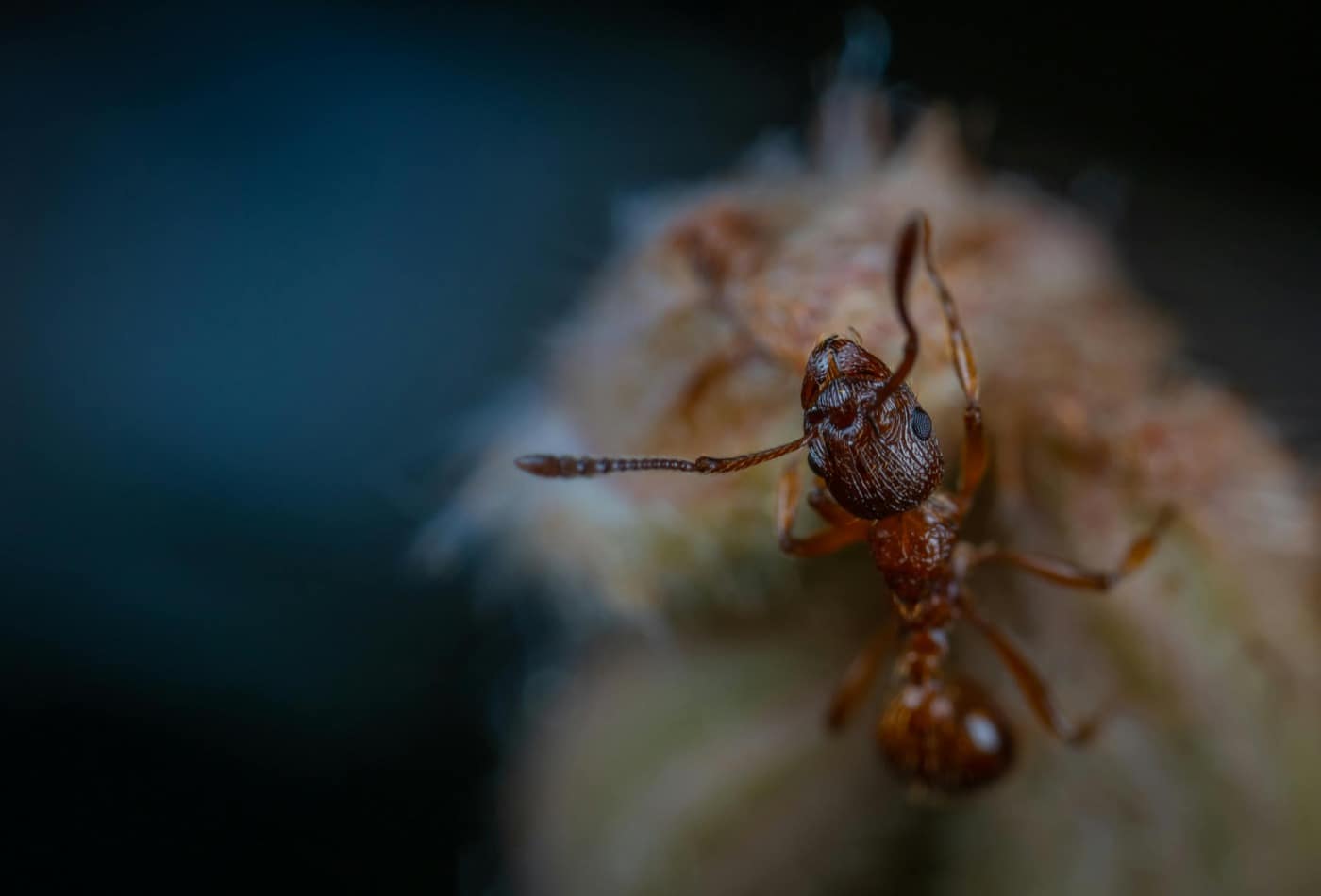

Deep in the humid undergrowth of tropical forests, a chilling drama unfolds. An ant, behaving erratically, abandons its colony and the familiar trails on the forest floor. It begins a strange, solitary ascent up the stem of a plant, a climb it seems powerless to stop. Reaching a precise height, it turns and, with a final, shuddering convulsion, clamps its mandibles onto the underside of a leaf in a grip so powerful it will not release even in death. It is now a ticking time bomb. But what drove this ant to its bizarre end? The culprit is not a predator or a neurological disease, but a parasitic fungus that has seized control of its body, turning it into a walking “zombie.” This is the macabre and fascinating truth behind Ophiocordyceps, the mind-controlling fungus.
Table Of Content
The Puppet Master’s Invasion
The horror begins with a single, microscopic spore. Landing on an unsuspecting carpenter ant (Camponotus species), the spore penetrates the ant’s tough exoskeleton and begins to multiply within its body. For several days, the ant appears normal, continuing its duties within the colony. But beneath the surface, a hostile takeover is underway. The fungus, now a network of interconnected cells called mycelia, spreads relentlessly, infiltrating the ant’s body cavity and weaving itself around muscle fibers.
This fungal network is the key to the manipulation. Groundbreaking research from Penn State University, led by biologist David Hughes, used 3D imaging to reveal something astonishing. The fungus doesn’t actually invade the ant’s brain. Instead, it forms a vast, interconnected web throughout the body, effectively creating an external brain or a biological marionette system. The ant’s brain remains intact, a prisoner in its own body, while the fungus seizes direct control of its muscles.
As David Hughes described it, the fungus acts as the “puppet master pulling the strings.” The brain is left to watch, unable to stop the bizarre, self-destructive journey its body is forced to take. This is arguably more terrifying than simple brain-hijacking; it suggests the ant may be a conscious passenger on its own path to doom.
A Chemical Cocktail for Mind Control
While the fungus physically controls the ant’s muscles, it also unleashes a powerful cocktail of bioactive chemicals to manipulate its behavior. Scientists are still working to decode this complex chemical language, but they have identified compounds that have profound effects on the ant’s nervous system.
These chemicals can disrupt the ant’s ability to detect pheromones, the chemical signals that ants use to communicate and navigate. This effectively severs the ant’s connection to its colony, isolating it and making it easier to control. It becomes an outcast, wandering aimlessly until the fungus fully takes the helm.
Then comes the final, gruesome sequence. The fungus secretes compounds that induce convulsions in the muscles of the ant’s mandibles. This forces the ant to perform the characteristic “death grip” on a leaf or twig. The force is so immense that it causes the muscle fibers to atrophy and lock in place, ensuring the ant remains anchored even after death.
A little-known fact: This parasitic relationship is ancient. Scientists have discovered a 48-million-year-old fossilized leaf from Germany bearing the distinct dumbbell-shaped bite marks characteristic of an Ophiocordyceps-infected ant. This “death grip” is so unique it serves as a fossil record of parasitic mind control, proving this drama has been playing out for eons.
The Fungus’s Grand Finale
The ant’s final resting place is no accident. The fungus has manipulated it to a location with the perfect microclimate—typically 20-30 centimeters off the ground, on the north side of a plant, where the temperature and humidity are ideal for fungal growth. This precision is staggering.
Here’s another surprising fact: The fungus often synchronizes the final climb and bite of multiple ants in an area to occur around solar noon. This coordination ensures that the fungal fruiting bodies will all be ready to release their spores at the same time, maximizing the chances of infecting new hosts below.
Once the ant is dead, the fungus consumes its internal tissues for nutrients. After a few days, a stalk, or stroma, erupts from the back of the ant’s head. This stalk grows and develops a fruiting body which, when mature, rains down a deadly shower of spores onto the forest floor below, ready to infect the next wave of unsuspecting ants. The puppet master’s life cycle is complete, having turned its host into the perfect launching pad for its own reproduction.
The zombie ant fungus is more than just a gruesome curiosity; it is a stunning example of evolutionary precision. It forces us to reconsider our understanding of parasites, not as simple freeloaders, but as sophisticated manipulators capable of commandeering the very bodies and behaviors of their hosts.
This macabre dance between fungus and ant reveals a level of biological control that rivals the most imaginative science fiction. It begs the question: what other unseen puppeteers are pulling the strings in the natural world, and what can they teach us about the complex nature of control, behavior, and free will?
References:
- Andersen, S. B., Gerritsma, S., Yusah, K. M., et al. (2009). The life of a zombie: an ecosystem of fungus-ant interactions. Communicative & Integrative Biology, 2(5), 416-419.
- de Bekker, C., Ohm, R. A., Loreto, R. G., et al. (2015). Gene expression during zombie ant biting behavior reflects complex fungal interactions with its ant host. BMC Genomics, 16, 620.
- Hughes, D. P., Andersen, S. B., Hywel-Jones, N. L., et al. (2011). Behavioral mechanisms and morphological symptoms of zombie ants dying from fungal infection. BMC Ecology, 11, 13.
- Hughes, D. P., Wappler, T., & Labandeira, C. C. (2011). Ancient death-grip leaf scars reveal ant-fungal parasitism. Biology Letters, 7(1), 67-70.
- Fredericksen, M. A., Zhang, Y., Hazen, M. L., et al. (2017). Three-dimensional visualization and a deep-learning model reveal complex fungal parasites that hijack ant brains. Proceedings of the National Academy of Sciences, 114(47), 12590-12595.