



The Open Model Showdown: OpenAI, Meta, and DeepSeek Redefine the AI Landscape
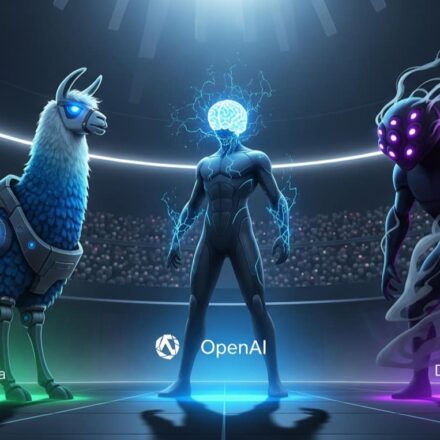
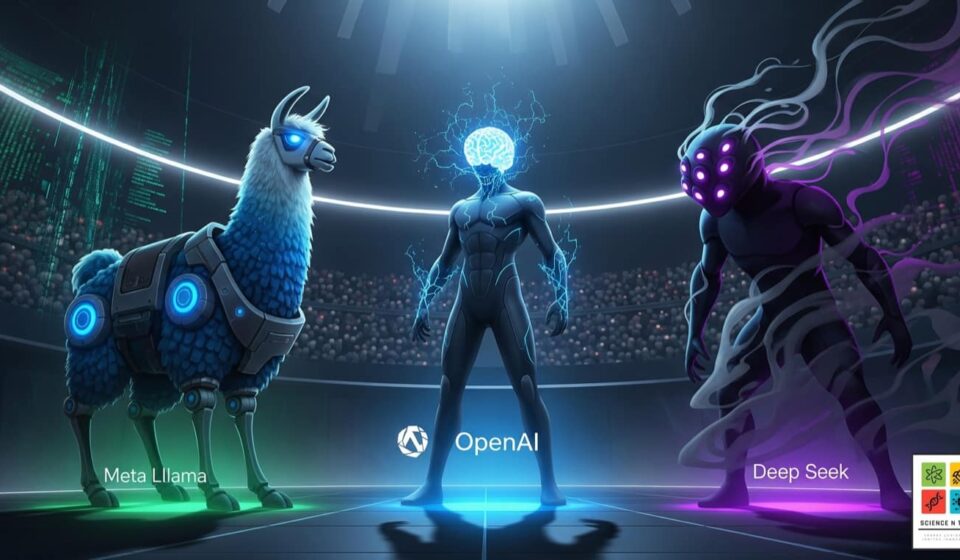
The race to dominate the next era of artificial intelligence has reached a fever pitch as OpenAI, Meta, and DeepSeek unleash powerful, openly available language models—sparking a face-off that’s rocking both Silicon Valley and global tech innovators.
With OpenAI’s recent announcement of two open-weight large language models, “gpt-oss-120b” and “gpt-oss-20b,” the company behind ChatGPT has returned to its open-source roots after years of a closed, API-focused strategy. These cutting-edge models can be freely downloaded, fine-tuned, and deployed directly by developers and businesses—a move that echoes and intensifies the competitive spirit of Meta’s Llama series and DeepSeek’s headline-grabbing R1 models.
A New Era of Customizable AI
OpenAI’s CEO, Sam Altman, underscored the historic pivot: “We’re excited to make these models, the result of billions of dollars in research, available to ensure AI’s impact is truly democratic and reaches as many people as possible.” The models, available under a permissive Apache 2.0 license, are designed for seamless integration and agentic workflows, meaning enterprises and individual tinkerers alike can sculpt AI agents for tasks ranging from customer support automation to research and software development.
But OpenAI is not alone in this mission. Meta, led by Mark Zuckerberg, remains adamant that open and customizable models like its newest Llama 4 are essential for democratizing AI. The Llama 4 boasts blistering speed, the ability to reason in over 200 languages, and a context window spanning millions of words—making it a multilingual powerhouse that can be tailored for diverse applications worldwide. However, some restriction nuances have prompted debates over what qualifies as truly “open source,” with Meta’s models licensed for commercial use yet still guarding aspects of their architecture.
Meanwhile, Chinese upstart DeepSeek is shaking the global AI hierarchy. Its R1 and upcoming R2 models have stunned the industry by matching or surpassing OpenAI and Meta benchmarks in reasoning and efficiency—despite a fraction of the development costs. Trained on clever “sparsity” techniques and efficient hardware use, DeepSeek’s models run on consumer-grade devices and are fully open under the MIT License, further accelerating innovation in AI and putting it within reach for startups and academics worldwide.
The Stakes: Innovation, Security, and the Path to AGI
As these AI titans battle for market and mindshare, the industry continues to flirt with even more radical advances. OpenAI is rumored—based on recent executive teases and tech press leaks—to be days away from releasing GPT-5, a step expected to push the boundaries of natural language understanding and creativity yet again.
Not to be outdone, Google’s DeepMind just unveiled Genie 3, a next-generation “world model” that generates immersive, interactive 3D environments from a mere text prompt. Genie 3’s real-time rendering and emergent memory features are set to revolutionize everything from robotics training to digital media creation, signaling a bigger march toward Artificial General Intelligence (AGI)—where AI can reason and operate much like a human across multiple domains.
Caution Amidst Progress
Yet, this breakneck pace raises red flags among security and ethics experts. Freely available, high-power AI models increase the risk of misuse, from generating deepfakes to orchestrating complex cyber threats. OpenAI has acknowledged these concerns, stating that even maliciously fine-tuned models have so far shown “limited capability,” but the conversation about responsible AI development is far from over.
A New Dawn for AI
The 2025 open model showdown marks a watershed moment: OpenAI, Meta, and DeepSeek are not just confronting each other—they’re opening up the AI future for the world. For developers, businesses, and society at large, this battle means faster innovation, deeper customization, and broader access to the transformative power of artificial intelligence.
Stay tuned—the AI revolution is only just beginning, and the next breakthrough may come from anywhere.