



The line between technology and biology is blurring. In a move that sounds like it’s straight out of a science fiction novel, Melbourne-based Cortical Labs has unveiled the CL1, the world’s first commercial biological computer. This groundbreaking system is powered by something truly remarkable: lab-grown human neurons. Available through a cloud-based platform, this “Wetware-as-a-Service” is set to revolutionize everything from medicine to artificial intelligence.
Table Of Content
What is a Biological Computer?
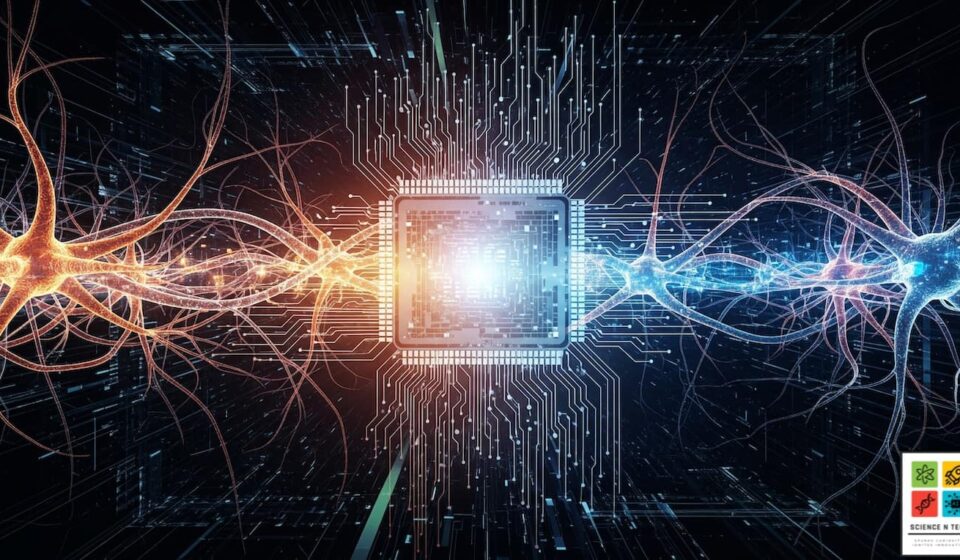
At its core, a biological computer, or what Cortical Labs calls “Synthetic Biological Intelligence,” is a hybrid of living tissue and silicon hardware. The CL1 system cultivates human brain cells on a microelectrode array. This array acts as a bridge, allowing for two-way communication between the neurons and a computer. The neurons can receive input, learn, and even act on their environment, all while being sustained by a sophisticated life-support system.
This isn’t just a theoretical concept. In 2022, Cortical Labs famously taught a cluster of these neurons to play the classic video game Pong. The neurons learned to control the paddle, demonstrating an ability to perform goal-directed tasks. This experiment was a pivotal proof-of-concept, showcasing the incredible potential of harnessing the innate intelligence of brain cells.
The Power of “Wetware-as-a-Service”
One of the most innovative aspects of the CL1 is its accessibility. Through their cloud platform, Cortical Labs offers “Wetware-as-a-Service.” This allows researchers and developers from around the globe to remotely access and experiment with these biological neural networks without needing a specialized lab. This democratization of technology is poised to accelerate discovery and innovation in a multitude of fields.
Revolutionizing Medicine and Drug Discovery
The most immediate and profound impact of the CL1 is likely to be in the medical field. By using human neurons, researchers can create highly accurate models of the human brain. This has the potential to revolutionize how we study and treat neurological diseases like Alzheimer’s, Parkinson’s, and epilepsy.
Instead of relying on animal models, which often don’t translate perfectly to human biology, scientists can test the effects of new drugs directly on human neural tissue. This could dramatically speed up the drug discovery process, reduce costs, and lead to more effective and personalized treatments. Imagine being able to test a new Alzheimer’s drug on a model of a patient’s own neurons, providing a level of precision medicine that was previously unimaginable.
The Next Generation of Artificial Intelligence
While traditional AI has made incredible strides, it has its limitations. Training large language models, for example, requires vast amounts of data and consumes enormous amounts of energy. Biological computers like the CL1 offer a more efficient and sustainable path forward.
Because they are powered by living neurons, these systems can learn from small datasets much faster and with a fraction of the energy consumption of their silicon-based counterparts. The CL1’s neurons can self-organize and adapt, exhibiting a form of “fluid intelligence” that current AI struggles to replicate. This could lead to the development of truly autonomous and adaptive AI systems that can solve complex problems in ways we can’t yet fathom.
A New Era of Computing
The CL1 represents a paradigm shift in computing. It’s a move away from the rigid, binary world of traditional computers and towards a more organic, adaptive, and efficient form of intelligence. The potential applications are vast and varied, from creating more sophisticated brain-machine interfaces to developing ultra-efficient, low-power computing solutions.
We are still in the early days of this technology, and scientists are just beginning to unlock its full potential. However, the launch of the CL1 marks a significant milestone. It’s the dawn of a new era where biology and technology are merging in ways we’ve only dreamed of. The future of computing may not be just about faster chips and more powerful processors; it may be about harnessing the incredible power of life itself.