


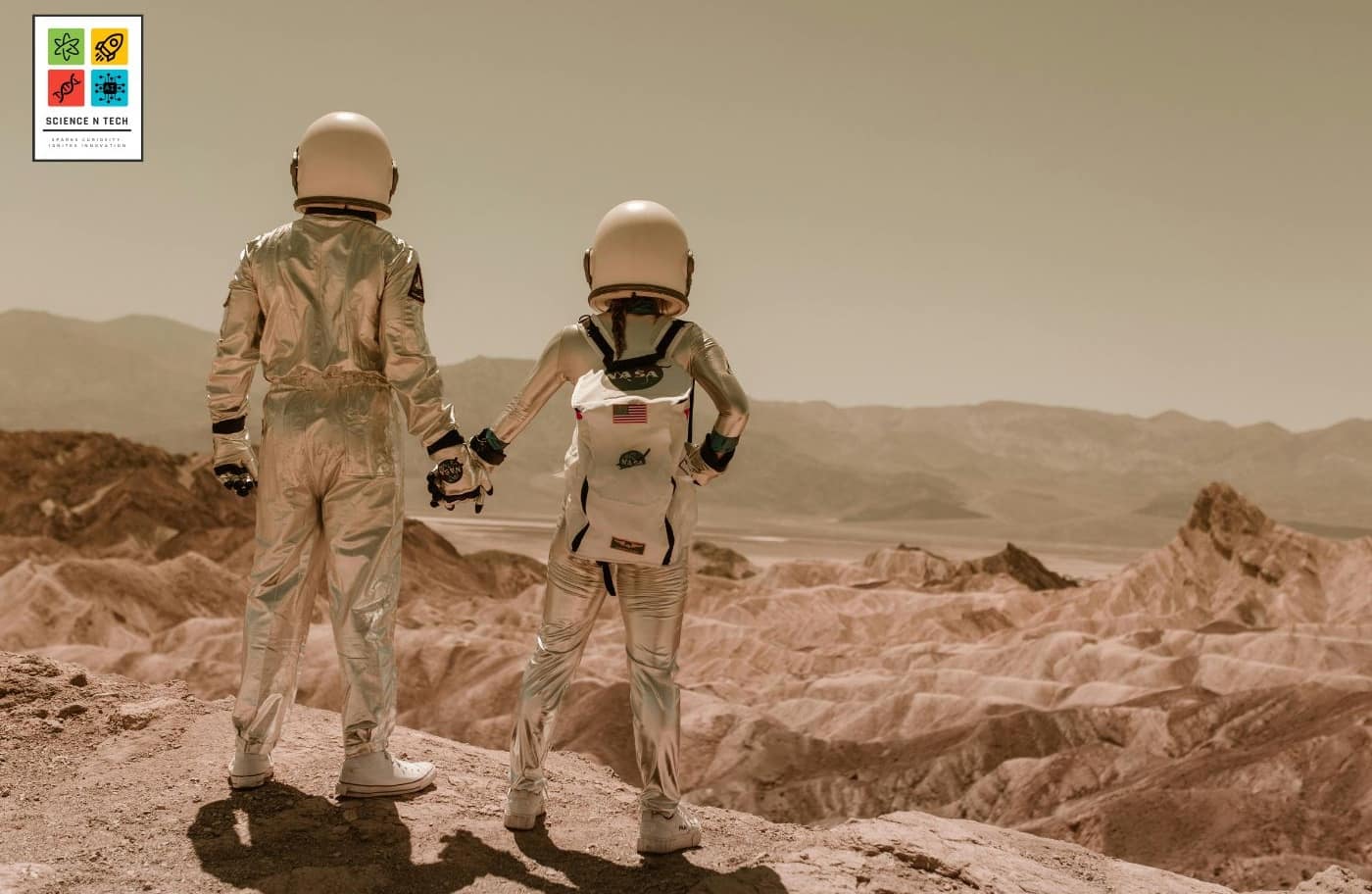

The dream is as old as the telescope: humanity setting foot on the red soil of Mars. In the 21st century, this vision feels closer than ever, propelled by the ambitions of SpaceX’s Starship and NASA’s Artemis program. We can almost picture the first Martian sunrise viewed from inside a helmet, a moment that would redefine our species as multi-planetary. Yet, between our terrestrial cradle and that Martian horizon lies a gulf of extreme danger and monumental challenges that go far beyond just building a powerful enough rocket. The cold, hard truth is that Mars is actively trying to kill you. Here are the staggering obstacles we must overcome to survive there.
Table Of Content
The Tyranny of Distance and Time: Just Getting There
The first great hurdle is the journey itself. A trip to Mars is not a weekend getaway; it’s a grueling 6-to-9-month voyage through the most hostile environment known to life: deep space. Confined to a small spacecraft, astronauts would face two relentless and invisible threats.
The first is cosmic radiation. Earth’s magnetic field and thick atmosphere shield us from a constant barrage of Galactic Cosmic Rays (GCRs)—high-energy particles flung from distant supernovae. Once outside this protective bubble, astronauts are fully exposed. A round trip to Mars could expose a crew to radiation doses up to 1000 times higher than what we experience on Earth in a year. This dramatically increases the lifetime risk of cancer, cataracts, and potential damage to the central nervous system, affecting cognitive function and memory.
The second threat is microgravity. The prolonged weightlessness takes a brutal toll on the human body. Without the constant pull of gravity, bones begin to lose density at a rate of over 1% per month, a condition similar to severe osteoporosis. Muscles atrophy, and even the cardiovascular system weakens. One of the most surprising effects is on vision; many astronauts on the International Space Station have experienced changes to the shape of their eyeballs and optic nerves, leading to farsightedness in a condition known as Spaceflight-Associated Neuro-ocular Syndrome (SANS).
A surprising fact: The current safety limits set by NASA cap an astronaut’s career radiation exposure. A single mission to Mars would likely exceed this entire career limit, forcing us to either develop revolutionary shielding technology or accept a much higher level of risk for the first Martian pioneers.
Surviving on an Alien World: The Hostile Martian Environment
Arriving at Mars is only the beginning of the battle. The planet itself is an unforgiving desert.
- A Breathable Atmosphere? Not a Chance. Mars’s atmosphere is less than 1% as thick as Earth’s and is composed of 95% carbon dioxide. It offers no breathable air and provides virtually no protection from the sun’s ultraviolet radiation or incoming cosmic rays. The low atmospheric pressure is so extreme that without a pressurized suit, a human’s blood would literally boil.
- Toxic, Abrasive Dust. The iconic red soil of Mars is laced with perchlorates, a class of toxic chemicals that can be harmful to the human thyroid gland and respiratory system. This fine, pervasive dust could also cling to spacesuits, get into habitats, and contaminate life-support systems. Its abrasive nature could wear down seals and moving parts on vital equipment.
- Living Off the Land. Shipping supplies from Earth is prohibitively expensive, so a Martian colony must be self-sufficient. This concept, known as In-Situ Resource Utilization (ISRU), is critical. Colonists will need to become expert Martian miners, extracting water from subsurface ice, generating oxygen from the CO₂ in the atmosphere, and creating building materials from the local rock. Fortunately, NASA’s Perseverance rover carried an experiment called MOXIE (Mars Oxygen In-Situ Resource Utilization Experiment) which has already proven it can successfully produce oxygen on Mars, a major step forward.
Another surprising fact: Mars has a much weaker gravitational pull, only about 38% of Earth’s. While this would make moving around feel easy, scientists have no idea what the long-term health consequences of living in a partial-gravity environment would be. It’s possible that human bodies could adapt to low gravity in ways that would make it impossible to ever safely return to Earth’s much stronger pull, creating a true “point of no return.”
The Human Factor: The Psychology of Isolation
Perhaps the most underestimated challenge is the immense psychological strain. The first Martian colonists will be more isolated than any humans in history.
Confined to a small habitat—a “can on Mars”—with the same few people for years on end, the risk of interpersonal conflict, depression, and anxiety is immense. This is compounded by the communication delay. Due to the distance between Earth and Mars, radio signals can take anywhere from 4 to 22 minutes to travel one way. This means no real-time conversations, no instant help from Mission Control in an emergency. If a life-support system fails or an astronaut has a medical emergency, the crew is on their own for at least the time it takes for a message to reach Earth and for a reply to be sent back.
To study these effects, NASA has funded ground-based analog missions like HI-SEAS in Hawaii, where crews live in a simulated Mars habitat on a volcano for months at a time, testing a “Mars-like” isolation and communication delay to understand how to keep future astronauts sane and effective.
The challenges are monumental, perhaps the greatest our species has ever faced. But they are not insurmountable. They are engineering, medical, and psychological problems that some of the brightest minds on Earth are actively working to solve.
The journey to Mars will test the absolute limits of our technology, our biology, and our spirit. The question is not simply whether we can go, but whether we are truly prepared to overcome the immense risks to take that next giant leap. Is humanity ready to become Martian?
References
- NASA. (n.d.). Mars Exploration Program. Official Website.
- Link: https://mars.nasa.gov/
- NASA. (2021, April 21). NASA’s Perseverance Mars Rover Extracts First Oxygen from Red Planet.
- Note: This article details the success of the MOXIE experiment.
- Link: https://www.nasa.gov/press-release/nasa-s-perseverance-mars-rover-extracts-first-oxygen-from-red-planet
- University of Hawai’i. (n.d.). HI-SEAS: Hawai’i Space Exploration Analog and Simulation.
- Link: https://www.hi-seas.org/
- Patel, N. V. (2022, November 29). The human body in space: What’s the limit? The MIT Technology Review.
- Cucinotta, F. A., & Durante, M. (2006). Cancer risk from space radiation. The Lancet Oncology, 7(5), 431-435.