



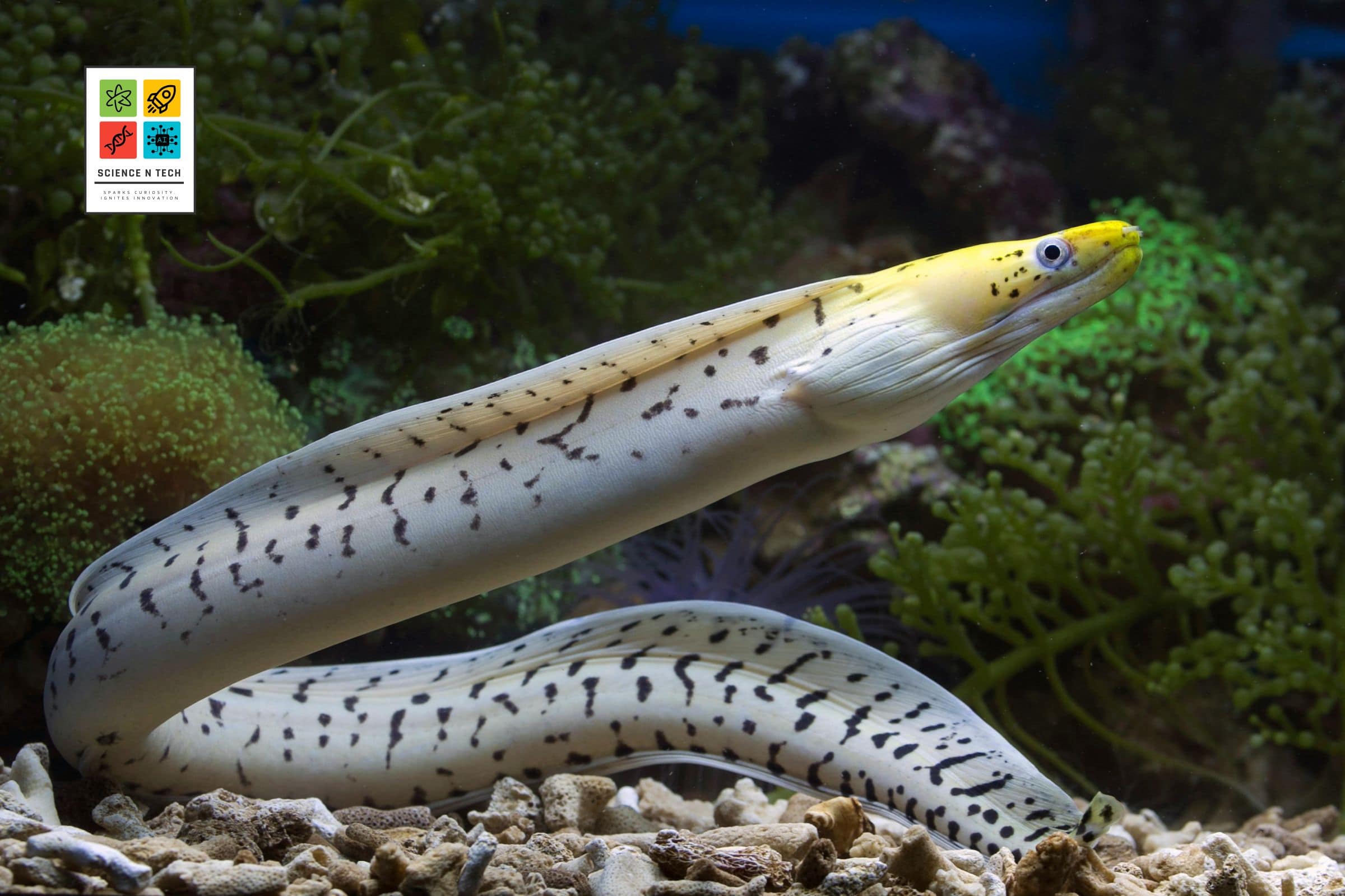

Deep within the murky, winding waters of the Amazon River lurks a creature of mythic proportions—a living battery that can unleash enough electricity to stop a horse in its tracks. It’s the electric eel, and while it doesn’t quite light up entire rivers, the reality of its biological superpower is far more shocking and fascinating than fiction. Join us on a journey into the world of this electrifying predator and discover how its natural spark is inspiring the technologies of tomorrow.
Table Of Content
The Science of the Shock
So, how does a living creature generate a jolt of electricity more powerful than a household socket? The electric eel is a master of bioelectricity. Its secret lies in three specialized organs that make up nearly 80% of its body: the Main Organ, the Hunter’s Organ, and the Sachs’ Organ. These organs are packed with thousands of modified muscle cells called electrocytes, stacked neatly like batteries in a remote control.
At rest, these biological batteries keep their positive and negative charges separate. But when the eel decides to attack or defend itself, its brain sends a near-instantaneous nerve signal. This command causes ion channels to open, allowing charged particles to flow and creating a sudden, massive difference in electrical potential. In a coordinated blast, all the electrocytes discharge at once. This isn’t just a tiny spark; a fully grown electric eel can generate a staggering 600 volts, and some have even been recorded at over 850 volts—more than enough to stun its prey or deter any would-be predator.
A High-Voltage Hunter
The electric eel doesn’t just use its power for defense. It’s a sophisticated and calculated hunter. It begins by emitting low-voltage pulses from its Sachs’ Organ, using them like a biological radar to navigate the dark waters and locate hidden prey. Once it finds a target, the eel unleashes a high-voltage volley from its Main and Hunter’s organs.
The initial shock doesn’t just stun; it causes the prey’s muscles to contract uncontrollably, revealing its location even if it’s hiding. The eel can then guide its final, lethal attack with pinpoint accuracy. It’s a stunning display of predatory evolution, combining stealth, surveillance, and overwhelming force into one electrifying package.
From Natural Wonder to Human Innovation
The incredible biology of the electric eel has not gone unnoticed by scientists and engineers. For centuries, we have been captivated by its ability to generate and control electricity. Today, the eel’s unique physiology is directly inspiring next-generation technology. Researchers are studying the electrocyte stacks to design more efficient and flexible batteries, hoping to mimic nature’s design for medical implants and soft robotics.
Imagine a pacemaker powered by a soft, biocompatible battery inspired by the electric eel, or flexible electronics that move and feel more natural. This shocking journey from the depths of the Amazon to the forefront of technological innovation reveals a profound truth: sometimes, nature’s most bizarre and powerful creations hold the very solutions we’ve been searching for. The electric eel is more than just a natural wonder; it’s a blueprint for the future.