



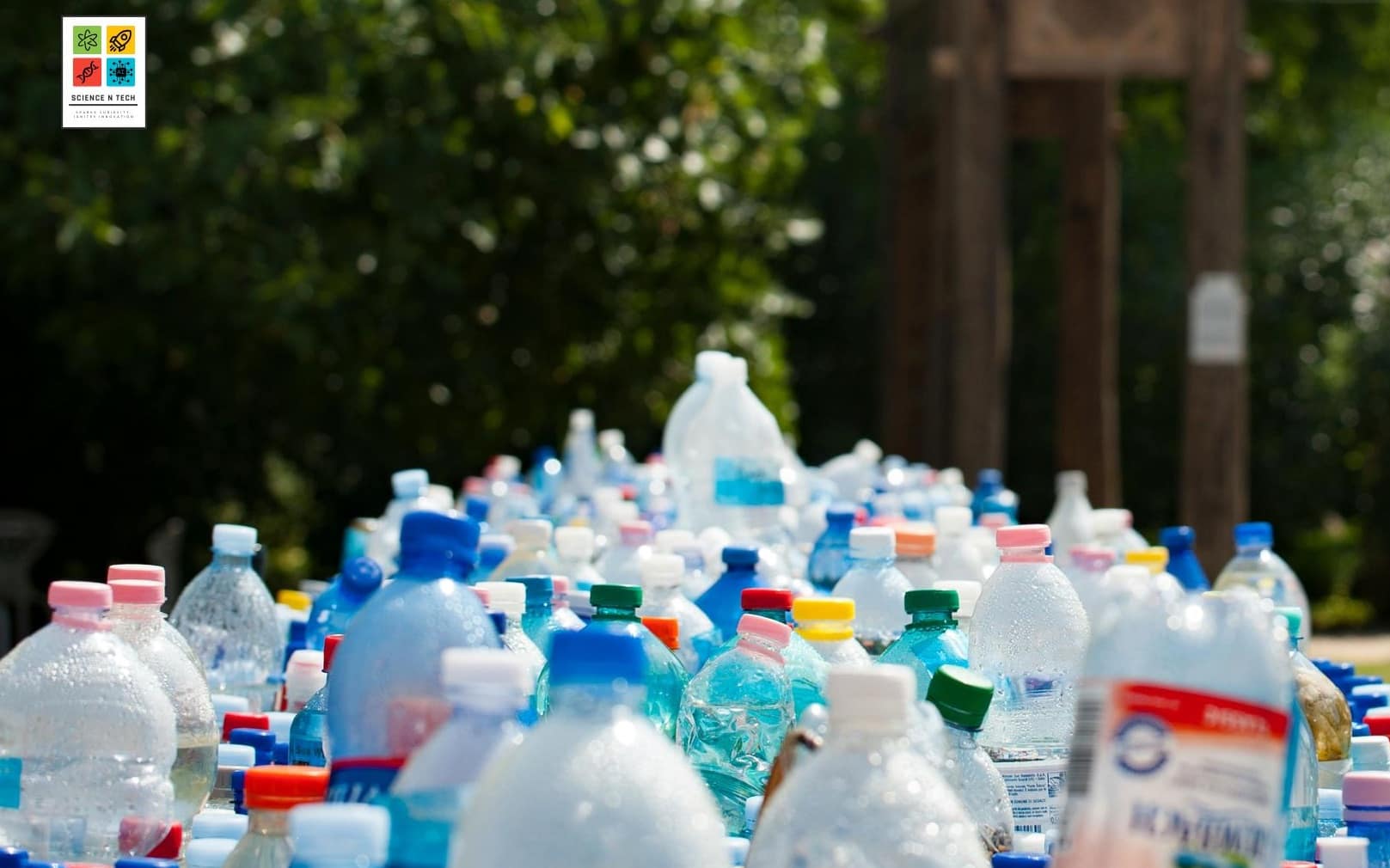

Our world is drowning in plastic. From the deepest ocean trenches to the highest mountain peaks, our disposable legacy persists, choking ecosystems and entering our own bodies. For decades, the solution has seemed to lie in futuristic, lab-grown inventions. But what if the answer isn’t a novelty? What if the most promising replacement for petroleum-based plastic is a supercharged version of a material we discarded decades ago—one that’s all around us, growing quietly in forests and fields? Meet cellulose, the most abundant organic polymer on Earth. It’s the forgotten hero that science is now resurrecting to build a cleaner future.
Table Of Content
The Original Bioplastic: A Brief History
Long before polyethylene and PVC dominated our lives, there was cellophane. Invented in 1908, this transparent, crinkly film was revolutionary. It was derived from the cellulose in wood pulp, making it one of the world’s first successful bioplastics. For decades, it was the gold standard for packaging everything from food to flowers. However, following World War II, the booming petrochemical industry introduced a new generation of plastics that were cheaper to produce, more durable, and more resistant to water. Cellophane and other early cellulose-based materials were pushed aside, becoming a forgotten relic of a bygone era.
The problem with these early bioplastics was that they were chemically treated but not fundamentally re-engineered. They retained some of cellulose’s natural weaknesses, particularly its tendency to absorb water and lose strength. But modern science has found a way to overcome these hurdles by taking cellulose apart and rebuilding it into something extraordinary.
Not Your Grandfather’s Cellophane: Reinventing a Natural Polymer
The comeback of cellulose is happening at the nanoscale. Scientists have learned to break down wood pulp, cotton, or even agricultural waste into its most fundamental building blocks: nanocellulose. This isn’t just one material, but a family of them, including super-strong Cellulose Nanocrystals (CNCs) and flexible Cellulose Nanofibrils (CNFs).
Think of a massive tree trunk. Its incredible strength comes from cellulose fibers. Now, imagine isolating those individual fibers, which are themselves bundles of even smaller, perfectly ordered crystalline structures. By doing this, you unlock a material with astounding properties. Nanocellulose is:
- Impossibly Strong: On a weight-for-weight basis, certain forms of nanocellulose are stronger than steel and Kevlar. It has one of the highest strength-to-weight ratios of any known material.
- Lightweight and Transparent: It can be formed into a clear film that looks just like plastic but is derived entirely from plants.
- An Excellent Barrier: Unlike many plastics, nanocellulose films are remarkably effective at blocking oxygen. This property could revolutionize food packaging, dramatically reducing spoilage and waste.
“We are no longer limited to using cellulose as it appears in nature,” explains Dr. Tekla Tammelin, a research professor at the VTT Technical Research Centre of Finland, a leader in nanocellulose research. “We can deconstruct it and reconstruct it into materials with precisely tailored properties. It’s about smart, green, functional materials.”
Here’s a surprising fact: Henry Ford, a pioneer of mass production, was also a bioplastic visionary. In the 1940s, he famously built a prototype car with body panels made from a mix of soybean, hemp, and other plant fibers. He envisioned a future of cars that “grew from the soil,” a dream that was sidelined by the rise of cheap steel and petrochemicals but is now being revisited by engineers using nanocellulose to create lightweight, strong components for vehicles.
The Supermaterial That Grows on Trees 🌳
The potential applications for this reborn material are staggering, moving far beyond simple packaging.
- Food & Beverage: Imagine food pouches that keep contents fresh for months without refrigeration or plastic-free “paper” bottles that can hold carbonated drinks.
- Electronics: Nanocellulose can be used to create flexible, biodegradable substrates for electronic circuits, leading to eco-friendly smartphones and roll-up displays.
- Automotive and Aerospace: Its incredible strength-to-weight ratio makes it an ideal candidate for reinforcing composites, creating lighter and more fuel-efficient cars and planes.
- Medicine: Because it’s biocompatible, nanocellulose is being developed for use in wound dressings, artificial cartilage, and scaffolds for growing new tissue.
Another little-known fact: The reflective, iridescent colors seen on some beetles and butterflies come from nano-structures that manipulate light. Scientists have replicated this by arranging cellulose nanocrystals into similar structures, creating vibrant, shimmering pigments that are completely non-toxic and biodegradable—a potential replacement for chemical dyes and metallic paints.
The greatest advantage, of course, is its origin. Cellulose is made by plants through photosynthesis, a process that pulls carbon dioxide from the atmosphere. Sourced from sustainably managed forests or agricultural waste streams (like straw or corn husks), nanocellulose production could be not just carbon-neutral, but carbon-negative. It’s a high-tech material that actively helps heal the planet.
For decades, we’ve been locked in a cycle of extracting, using, and discarding fossil fuels. The rediscovery of cellulose offers us a way out—a circular path where materials come from the Earth and safely return to it.
With the blueprints provided by nature and the tools of modern science, we are finally unlocking the true potential of a material that has been hiding in plain sight. Are we ready to move past the age of plastic and enter the age of cellulose?
References:
- Habibi, Y., Lucia, L. A., & Rojas, O. J. (2010). Cellulose Nanocrystals: Chemistry, Self-Assembly, and Applications. Chemical Reviews, 110(6), 3479–3500.
- Hubbe, M. A., Ferrer, A., Tyagi, P., et al. (2017). Nanocellulose in thin films, coatings, and surface modification: A review. Advances in Colloid and Interface Science, 249, 8-26.
- The Henry Ford Museum. (n.d.). 1941 Ford Soybean Car.
- VTT Technical Research Centre of Finland. (2019, June 18). Transparent cellulose film – a sustainable alternative to plastic for packaging.